
Respiratory Care Overview
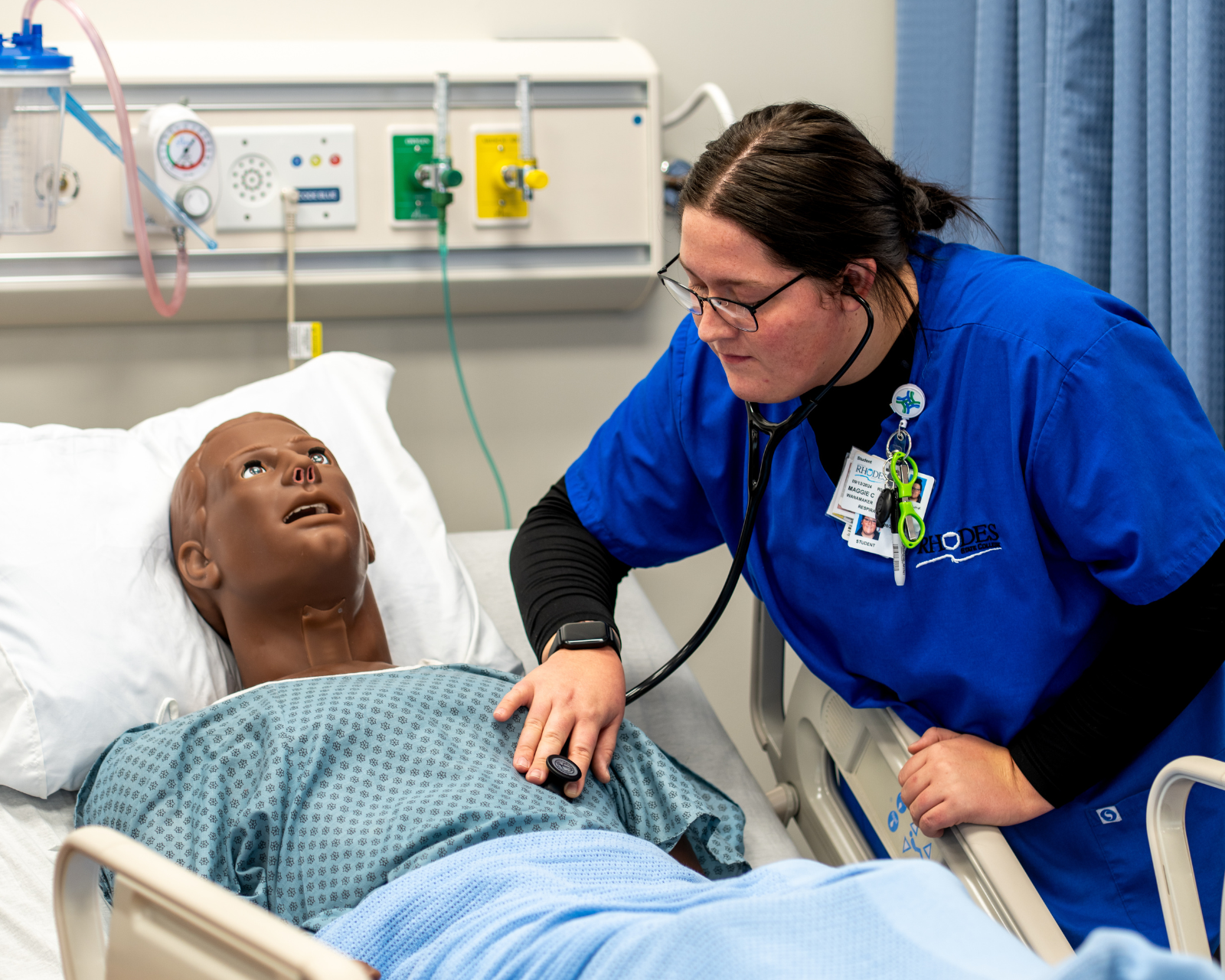
The Associate Degree in Respiratory Care at Rhodes State College will propel students into an exciting and rapidly growing career. Specialized training in the Rhodes State program will prepare students to manage high-tech ventilators and artificial airways for patients who are unable to breathe on their own. Students will be trained to educate patients and families about lung disease, diagnose lung and breathing disorders, recommend treatment, consult with physicians to optimize therapy, and analyze breath and blood samples to determine levels of oxygen and other gases.
The innovative educational delivery at Rhodes offers Respiratory Care students experiences with a variety of high-tech and alternative delivery opportunities, such as high-fidelity simulation, diverse clinical experiences, and dedicated faculty with over 100 years of experience. Students who wish to continue with a four-year degree can seamlessly transition through one of Rhodes State’s college and university partnerships.
The goal of the Respiratory Care Program is to prepare graduates with demonstrated competence in the cognitive (knowledge), psychomotor (skills), and affective (behavior) learning domains of respiratory care practice as performed by registered respiratory therapists (RRTs).
Become a part of this growing field. Watch this video to learn more about the great need for respiratory therapists.
Respiratory Care Program Meeting
One of the criteria for qualification to start the Respiratory Care Program is a Program Meeting. Our program meetings are designed to introduce you to the profession, job opportunities, program requirements, and other important information you will need to get started. Click on the following link to schedule a Program Meeting.
Meet with the Program Director
Respiratory Care Plan of Study
Distance Learning Options
- Through the Allied Health Consortium, Rhodes State College is committed to meeting students where they are, therefore students enrolled in the Respiratory Care Program have a variety of ways to complete their education.
- General Education requirements can be taken at the student's local community college or university and then can be transferred to Rhodes State to meet the general education requirements of the Respiratory Care Program.
- All Respiratory Care courses have lectures available in remote format, with the only in-person requirement being at the Borra Center once a week for labs.
- · Students are required to complete clinical rotations, which can be done at a location near their homes.
- Scholarship Opportunity
Rhodes State has been awarded a Choose Ohio First (COF) Scholarship grant by the Ohio Department of Higher Education. The grant provides scholarships to students majoring in disciplines that significantly strengthen Ohio’s competitiveness in Science, Technology, Engineering, Math, and Medicine (STEMM) education and industry.
Respiratory Care Highlights
 |
 |
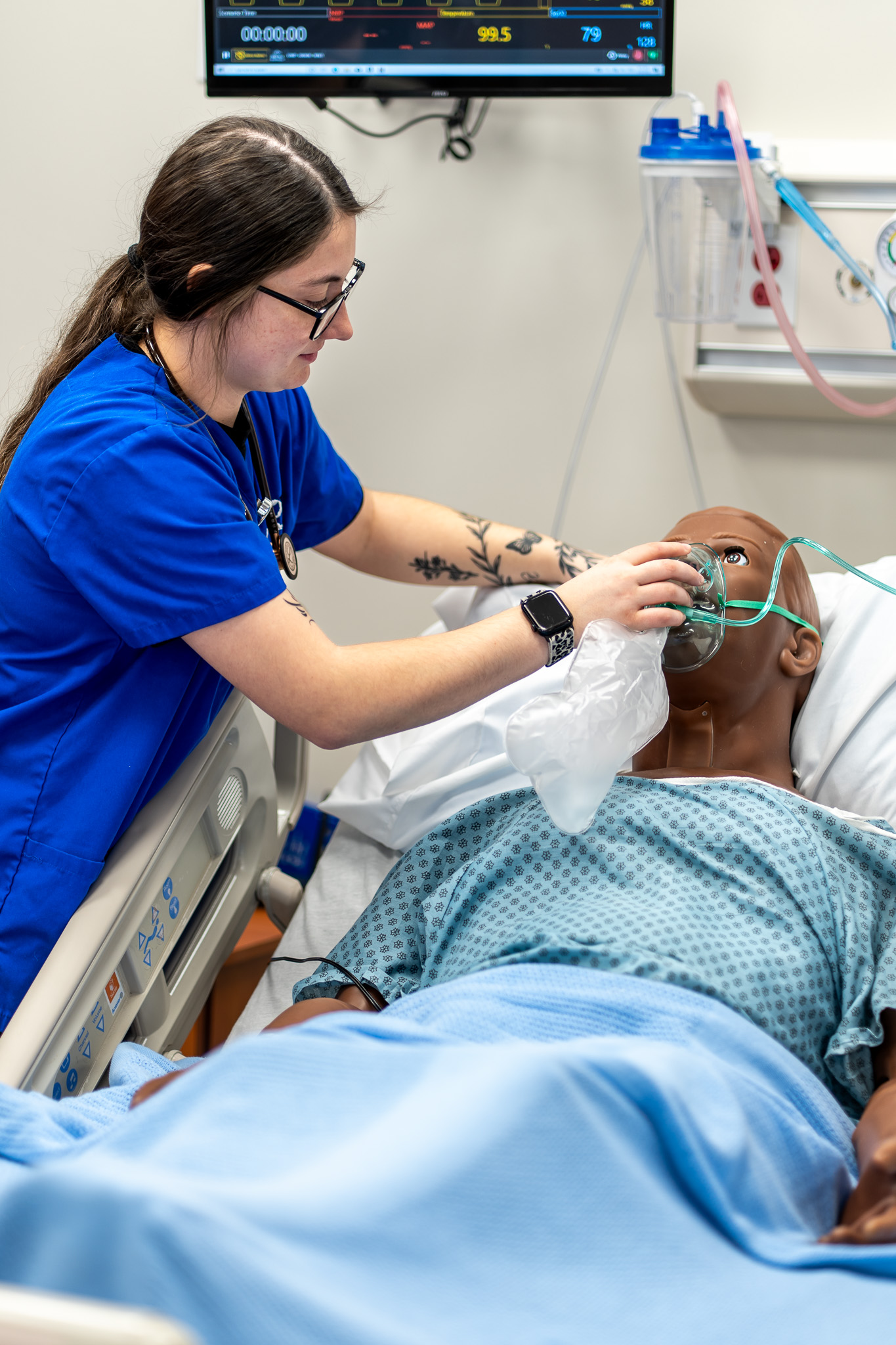 |
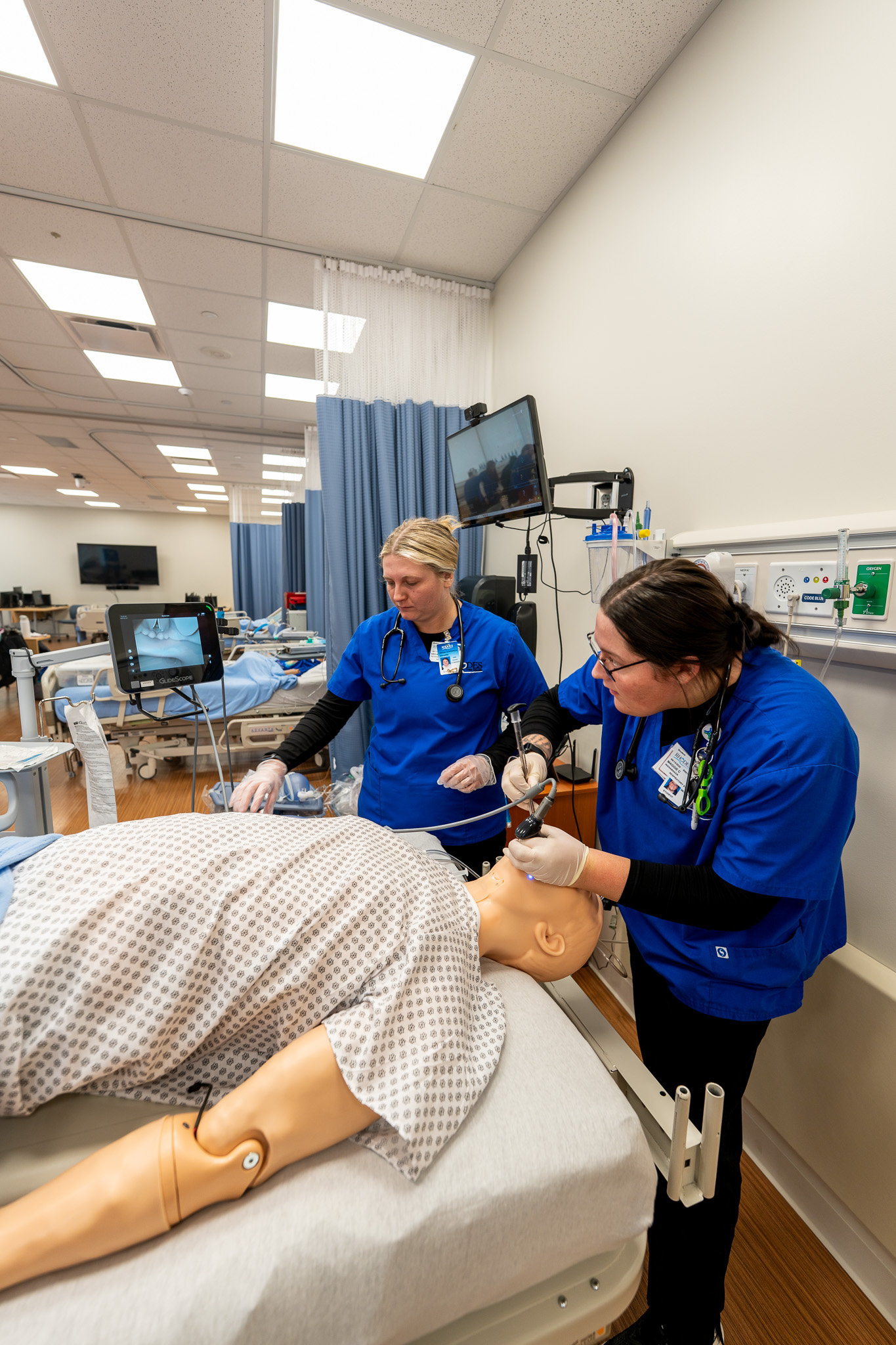
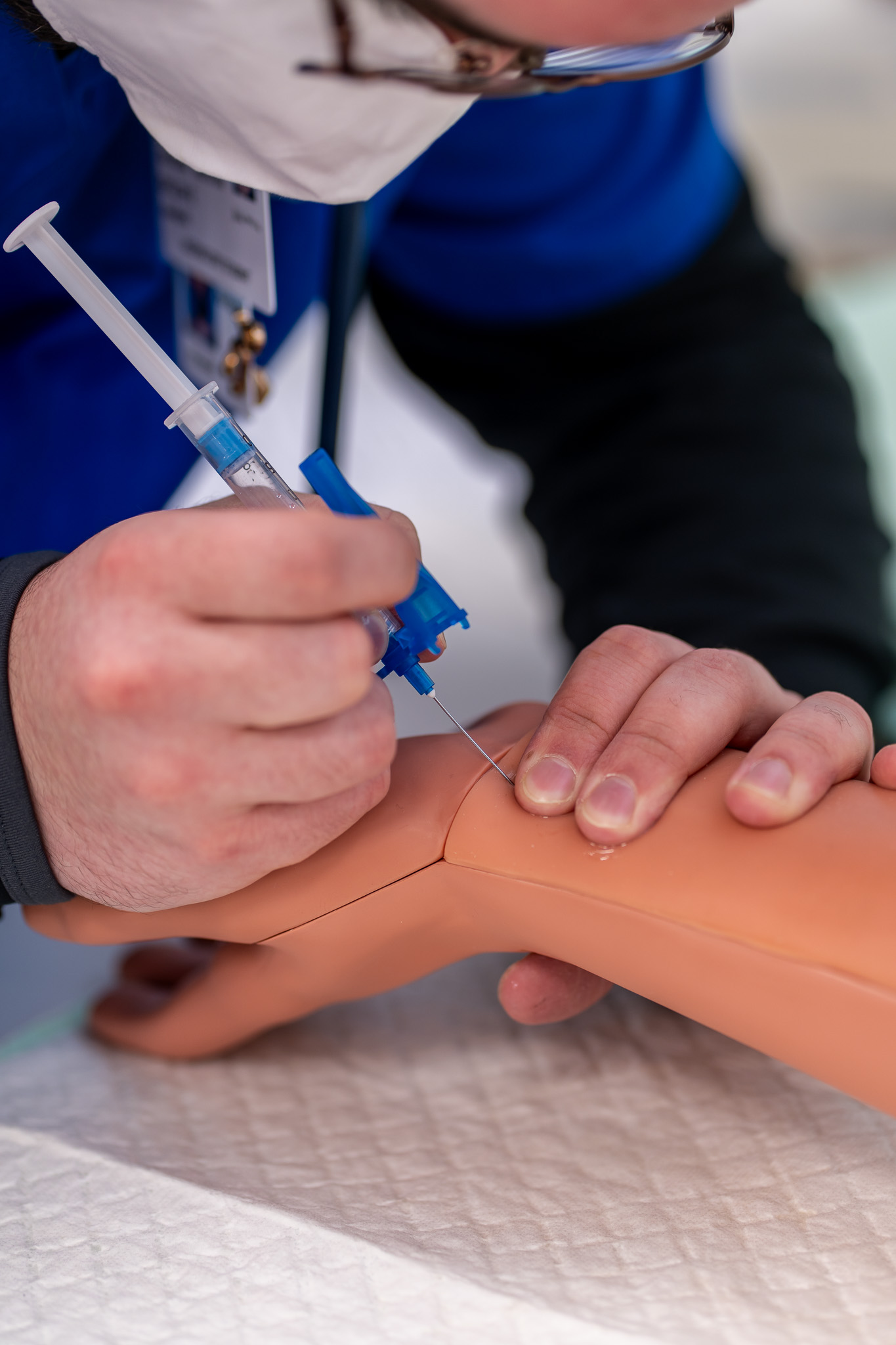
Respiratory Care students at Rhodes State will experience a variety of innovative educational delivery methods, including:
- High fidelity simulation
- Diverse clinical experiences
- Dedicated faculty with over 100 years of experience
Career Opportunities
According to the U.S. Bureau of Labor Statistics, the employment of Respiratory Therapists is projected to grow 13 percent from 2023 to 2033, much faster than the average for all occupations, with a mean salary of $77,960 per year.
additional info about the career
Professional Licensure Information
- Certified Respiratory Therapists (CRTs). Once a student has completed either a two-year associate’s degree or a four-year bachelor’s degree, they are eligible to take the national Therapist Multiple Choice exam.
- Registered Respiratory Therapists (RRTs). Once the respiratory therapist has successfully passed the Therapist Multiple Choice exam, he/she is eligible to take the national Clinical Simulation exam. Upon passing the Clinical Simulation exam, the therapist is awarded the RRT credential.
-
Starting with the graduating class of 2027, the Clinical Simulation examination will be eliminated and graduates will only take one Therapist Multiple Choice examination to achieve the RRT credential.
- For more information about the credentialing process: https://www.nbrc.org/
Licensure:
- All states (except Alaska) require licensure for respiratory therapists practicing in the United States.
- Note: Respiratory Care Professionals in Ohio are required to have the RRT credential as a minimum requirement for state licensure.
Accreditation Information
Rhodes State College Respiratory Care Program number 200324 is accredited by the Commission on Accreditation for Respiratory Care (www.coarc.com). We are seeking accreditation for the Rhodes State Respiratory Care Program at Ohio Health satellite program #300044.
CoARC
264 Precision Blvd
Telford, TN 37690 USA
Telephone: 817-283-2835
The program has been accredited since its inception in 1980.
CoARC accredits respiratory therapy education programs in the United States. To achieve this end, it utilizes an ‘outcomes based’ process. Programmatic outcomes are performance indicators that reflect the extent to which the educational goals of the program are achieved and by which program effectiveness is documented.
View Programmatic Outcomes Data
From a program effectiveness perspective, the CoARC views the RRT credential as a measure of a program’s success in inspiring its graduates to achieve their highest educational and professional aspirations.
Respiratory Program Faculty
Beth White, MS, RRT, RRT-NPS
Program Director, Respiratory Care Program
Associate Professor & Distance Coordinator
white.b@rhodesstate.edu
419-995-8198 (Office)
419-995-8093 (Fax)
Chuck Mulholland, MEd, RRT
Associate Professor & Director of Clinical Education
Respiratory Care Program
Mulholland.c@rhodesstate.edu
419-995-8371 (Office)
419-995-8818 (Fax)